
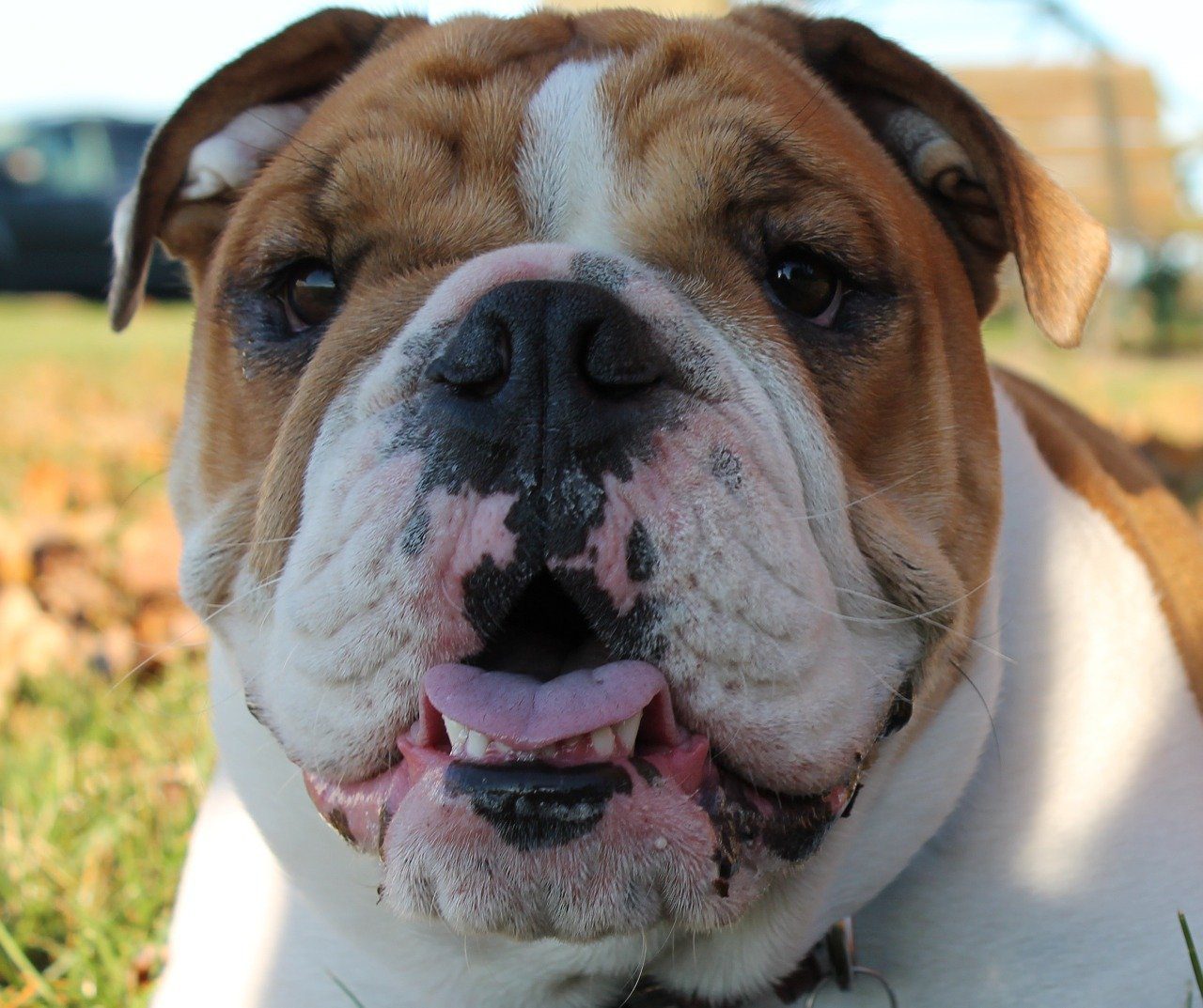
The Australian Bulldog Dog Overview
Australian Bulldogs are essentially English Bulldogs that have been bred specifically for Australian circumstances.
The Australian Bulldog is a medium-sized dog with a muscular body and short coat.
It possesses all of the desirable characteristics of the English Bulldog, such as loyalty and an affectionate disposition, but eliminates some of the physical characteristics that make bulldogs unsuitable for Australia’s climate.
Pip Nobes invented the modern Australian Bulldog in the early 1990s in Queensland. It was bred from an English Bulldog and an Australian pig hunting dog.
Australian pig dogs, who were bred to hunt the wild boar found in the country’s bush areas, are extremely robust working dogs that have adapted well to the harsh heat and dryness of the Australian climate. Nobes’ initial objective was to develop a Bulldog with a higher level of health.
The Australian Bulldog, like its English Bulldog relative, is an extremely friendly and people-oriented companion animal. The aggressive bull baiting for which the Bulldog was developed is no longer reflected in its demeanor.
Hundreds of years of selective breeding have developed the breed into a kind, calm, and loving companion that gets along well with youngsters and, in the majority of cases, other household pets.
Australian Bulldog Highlights

- Australian Bulldogs have a slightly longer lifespan than the average English Bulldog. Although the breed is still in its infancy, it is believed that with future breeding, the Australian Bulldog could develop into one of the more healthy and athletic bulldog varieties.
- The official records of this breed only go back to 2007. For this reason, they are rarer and do not have a strict standard.
- The American Kennel Club does not officially recognize this breed. However, this breed does have a club that keeps up with their breeding records. This puts the breed in an odd middle area.
- In Queensland, Australia, the Australian Bulldog was born. It was born in a hot and humid climate and adapts considerably more readily to Australian circumstances than its English cousin does.
- While hundreds of years of selective breeding have produced an extremely sociable and lovable modern English Bulldog, Australian Bulldog breeders are going above and beyond to ensure the breed develops an impeccable reputation for interaction with children and adults.
- Australian Bulldogs are available in a range of colors, including faun, red, white, brindles, and tan. Black is less prevalent and is often regarded as an unfavorable color by breeders.
Australian Bulldog Breed Features & Ratings:
Rated base on a 5 Star Scale
ENERGY LEVEL: 4 Star
EXERCISE REQUIREMENTS: 4 Star
PLAYFULNESS: 5 Star
AFFECTION LEVEL: 5 Star
FRIENDLINESS TO DOGS: 5 Star
FRIENDLINESS TO OTHER PETS: 5 Star
FRIENDLINESS TO STRANGERS: 5 Star
WATCHFULNESS: 5 Star
EASE OF TRAINING: 5 Star
GROOMING REQUIREMENTS: 5 Star
HEAT SENSITIVITY: 5 Star
VOCALITY 5 Star
Australian Bulldog Characteristics:
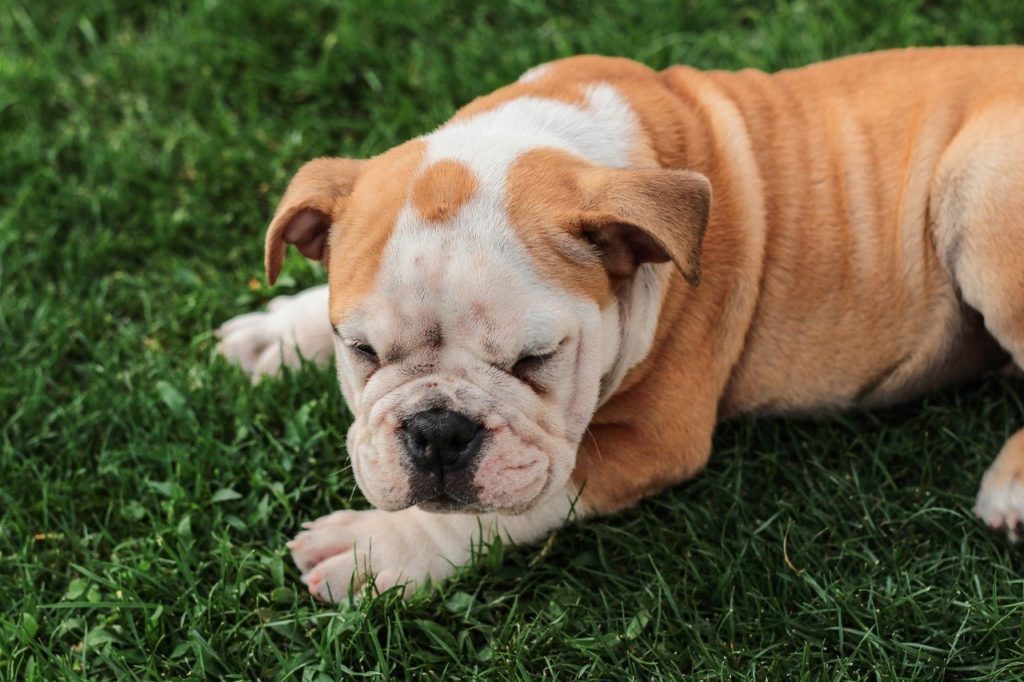
- Dog Breed Group: Non-Sporting Dogs
- Height: Male: 18-20 inches (46-51 cm) Female: 17-19 inches (44-48 cm)
- Weight: Male: 60-78 pounds (28-35 kg) Female: 50-61 pounds (23-28 kg)
- Life Span: 10 to 12 years
- Type: Purebred
- AREA OF ORIGIN: Australia
- DATE OF ORIGIN: 1990s
- OTHER NAMES: Aussie Bulldog
- Temperament: Alert, Easygoing, Familial, Intelligent, Loving, Loyal, Sensitive
- Activities:
- Color: Apricot, Brindle, Fawn, Orange, Red, Mahogany
- Litter Size: 5 to 8 puppies
- Puppy Prices: Between $2500 and $3500 USD on average
Australian Bulldog Health:
Numerous efforts have been made to preserve the Australian Bulldog’s genetic integrity and to prevent congenital problems. The Australian Bulldog, as a short-faced (brachycephalic) breed, is prone to specific breathing difficulties and may be more susceptible to heat exhaustion than other breeds.
Additionally, it is recommended that you wipe the dog’s face regularly with a moist towel to remove wrinkles — this will help prevent skin problems from occurring.
Australian Bulldog Grooming:
The Australian Bulldog sheds moderately. As such, having a soft-bristled brush on hand will help you keep up with the losing fur.
Avoid being very rigid with your brushing schedule—about once a week is plenty. Indeed, we recommend concealing a grooming brush next to your couch. This manner, you can squeeze in some work time while watching a movie or lounging.
Australian Bulldogs are susceptible to skin problems, and moisture trapped in their wrinkles can result in infection and inflammation.
Australian Bulldogs, on the other hand, have fewer wrinkles than English Bulldogs. Nonetheless, it’s a good idea to wipe their face, neck, and ears with a clean towel or dog-friendly wipe every few days.
Most crucial, keep these regions bone dry to avoid bacteria growth.
Finding the ideal bathing routine for an Australian Bulldog can be challenging. Some owners prefer to bathe their pups weekly, while others prefer to bathe them no more than once every six weeks.
It may take some time to develop the right routine for your dog’s delicate skin; if they experience skin irritation, you should seek assistance from your veterinarian.
Australian Bulldog Exercise:
While the average bulldog requires relatively little exercise, the Australian Bulldog is a more energetic breed.
These dogs thrive on daily walks and other outdoor activities. Additionally, it is a widespread belief that Australian Bulldogs are excellent swimmers.
Although many Bullies enjoy water, their thick chests cause them to sink like bricks – therefore keep an eye on your Bully when it is near water.
Exercise is critical for this breed to avoid obesity. Your Bully must be thoroughly exorcised to avoid developing a large stomach. Bullies that have large stomachs are unhappy bullies.
Australian Bulldog Training:
Australian Bulldogs are a clever breed that benefit from early socialization and training. This dog exhibits some dominance toward other dogs, and socialization will be necessary to mitigate this inclination.
These puppies should be socialized with other animals and children from an early age so that you may work with them to correct any undesirable behavior.
If an Australian Bulldog is raised alongside other dogs or is exposed to other pets from a young age, he will develop an easygoing and sociable personality rather than a domineering one.
Australian Bulldogs are devoted to their families and eager to please, which means they will react well to training methods based on positive reinforcement.
Encourage your dog to obey directions and learn where to go pee with praise and goodies. These dogs thrive when trained with a firm, persistent touch and desire leadership from their masters.
It’s critical to position yourself as the relationship’s alpha while still incorporating positive reinforcement and encouragement into your training.
Anything less than that is more akin to abuse than to training. Not only will you never achieve the desired objectives, but excessively negative training can permanently damage your bond with your puppy.
Australian Bulldog Food and Nutrition:
All canines, including the Australian Bulldog, require a nutritious, well-balanced diet.
Although these hybrids are generally healthy dogs, without the necessary nourishment to maintain them throughout their lives, they can acquire various deficits and health problems as a result.
To avoid this, feed your Australian Bulldog only premium-quality food.
The majority of owners choose dry food because it is convenient and contains all of the important nutrients that a dog needs. Naturally, not all dry foods are created equal, and it’s critical to choose a combination that your Australian Bulldog will thrive on.
As a general rule, this means kibble manufactured with high-quality, natural ingredients, with meat being the first component listed.
Avoid kibbles that are high in artificial chemicals and inexpensive fillers. Finally, the kibble you purchase should be customized to your dog’s specific nutritional requirements.
The Australian Bulldog is a medium-sized breed that requires a diet tailored to its size. Additionally, because these dogs are fairly active, they may benefit from high-quality dog food made specifically for energetic dogs.
Additionally, their kibble should be appropriately sized for their age. Puppies, adults, and seniors all have food requirements that are slightly different.
Once you’ve chosen the appropriate type of food for your Australian Bulldog, you should ensure that you’re feeding it in the recommended amounts.
A dog of this size typically requires no more than three cups of kibble each day, although specific amounts should be determined by the manufacturer.
Divide their daily food intake into two or more meals to keep them full and avoid bloating.
Australian Bulldog Temperament and Personality:
The Australian Bulldog is a family-oriented breed that is also rather gregarious.
Bulldogs were intended to fight bulls and other large creatures, and as a result, they are far less reserved than other breeds – this is also true of the Australian Bulldog. These canines have a proud demeanor and a relaxed yet confident demeanor in nature.
They are excellent companion dogs since they are extremely loyal to their owners and like human interaction.
Although this breed is rarely hostile toward humans, they make excellent watchdogs. Although the Australian Bulldog can be dominating toward other dogs in its domain, with correct socialization, it can coexist with other dogs and pets.
This is why it is critical to begin training and socializing your puppy immediately. It is critical not to waste those crucial puppy days.
Australian Bulldog Care/Upkeep:
While most Bulldogs are laid-back, the Australian Bulldog has a high exercise requirement. Because they were mixed with a few high-energy breeds, you will need to give this dog plenty of exercise.
When the weather permits, you should plan on taking long daily walks.
In hot weather, these dogs can overheat, and in cold weather, they can become chilled. To avoid heat strokes and other problems, you must exercise them carefully.
Allowing your Australian Bulldog to swim is not a good idea. While this may appear to be a wonderful approach to keep them active over the summer, these dogs are not terrific swimmers.
Even if they appear to be staying afloat easily, their shorter faces put them at risk of breathing water.
It’s also tough for them to stay afloat because of their large chest, which might cause additional issues. In the backyard, these dogs had a lot of fun.
The most important thing is to avoid exercising them while it is extremely hot or cold outside. It makes little difference how you exercise them.
Australian Bulldog Relationship with Children and Other Pets
Many families appreciate the quiet and laid-back demeanor of these dogs. They are not, however, extremely good with youngsters.
They are impatient and will not tolerate a barrage of ear tugging. When they are around children, they should always be watched to ensure that everyone is safe.
They are not suitable for families with small children. They get along nicely with older children if they are taught to treat the dog with gentleness and respect.
They aren’t extremely friendly toward other dogs and, if not properly socialized, can become territorial. It is crucial that they are socialized with other dogs from the time they are puppies.
They aren’t particularly fond of pursuing cats, but if they aren’t socialized with them, they will.
Because they have a low hunting drive, they can be taught that cats are not toys. Early introduction, on the other hand, is critical.
Otherwise, the dog may perceive them as prey or invaders on their domain. Cats and Aussie Bulldogs get along well when they’re raised together.
Australian Bulldog Names
| Rank | Boy Names | Girl Names |
| 01 | Buddy | Molly |
| 02 | Charlie | Bella |
| 03 | Cooper | Coco |
| 04 | Jack | Luna |
| 05 | Rocky | Emma |
| 06 | Sam | Ellie |
| 07 | Teddy | Zoey |
| 08 | Oscar | Sasha |
| 09 | Milo | Lulu |
| 10 | Lucky | Layla |
All About Australian Bulldog
Australian Bulldogs have a robust, compact build that is extremely muscular and strong. Female Australian Bulldogs should have longer bodies than male Australian Bulldogs.
Australian Bulldogs have a straight top line and a large chest with a well-let down brisket. Their tail cartridge exits directly behind them, and their tail may or may not be docked.
Australian Bulldogs have a large, square head that is significantly deeper and wider at the muzzle. Between their huge, wide-set eyes, they have a distinct stop.
This breed has a wrinkled nose. Show-bred Australian Bulldogs have a nearly flat bite and huge teeth. Their broad jaw structure should be square on both ends.
Australian Bulldogs are known for their short, glossy coats that come in a range of colors. There are at least five show-quality brindle hues.
This canine may also have a pied coat, which means that one coat color is more dominant on the body than another. Australian Bulldogs frequently have a patchwork pattern on their bodies.
The Australian Bulldog is a medium-sized dog that enjoys family life. The Australian Bulldog is a clever, affectionate, and loyal dog with a stable disposition.
This breed is fairly docile and good with youngsters. It will appreciate throwing a ball or Frisbee and will enjoy playing in or swimming in water. It is an excellent watchdog but not a guard dog, despite the fact that its appearance can act as a deterrent.
Given this breed’s vigilance, the Aussie Bulldog can evolve into a dependable guard dog. It is a very easy dog to educate at home due to its intelligence and loyalty, however obedience training is required (as with any breed of dog).
The Aussie Bulldog is a strong dog with an endearing demeanor. This breed is dependent on its owners for leadership.
As with all dogs, they require a stern but calm pack leader who is confident and consistent, as well as daily mental and physical activity to minimize behavioral problems.
Australian Bulldog History:
The Australian Bulldog is a relatively new domesticated dog breed, having been bred in Queensland, Australia, in the 1990s. Pip Nobes initially crossed an English Bulldog with an Australian bull terrier-bred pig hunting dog.
The cross resulted in a Bulldog that was taller and more athletic, with fewer health problems and a higher tolerance for the Australian heat.
The English Bulldog was developed in England for bull baiting, a practice in which dogs attempted to grasp onto the nose and face of an agitated bull.
It was believed that the meat would be more delicate and delectable by rousing and heating a bull’s spirits after slaughter. Bull baiting was another popular spectator sport, and other animals such as bears were also baited.
When bull-baiting was prohibited in the 1930s, the English Bulldog quickly became obsolete. Even though they were no longer forced to fight, many people in England acquired a liking for the Bulldog’s exceptional devotion, tenacity, and strength.
While the breed remained robust and loyal, its aggressive temperament was quickly replaced with a cheerful and friendly nature.
When the modern English Bulldogs arrived in Australia, they were particularly unsuited to the country’s harsh heat.
Nobes’ development of a healthier Australian Bulldog breed was featured on Burke’s Backyard in 1998, and the Bulldog was positioned as having a terrific disposition and being significantly healthier than the English Bulldog.
The Australian Bulldog captivated the nation’s attention from that point on, and the breed has had tremendous success.
Pip Nobes formed the United Australian Bulldog Association in 2003. (UABA). In 2004, she broke away from that organization and founded the Australian Bulldog Society (ABS).
The group’s objective is to formally recognize the Australian Bulldog by the Australian National Kennel Council (ANKC). The ANKC has not completely recognized the breed to this day.
Due to the Australian Bulldog’s youth, it’s impossible to quantify the exact amount to which it outperforms the English Bulldog in terms of health.
While the Australian Bulldog is prone to many of the same health problems as the English Bulldog, many of these problems are less severe or occur at a lower rate in the breed.
Brachycephalic Syndrome is still a prevalent issue in the breed, and the Australian Bulldog should be regularly monitored when outdoors, exercising, or during periods of extreme heat.
Where to Adopt Australian Bulldog:
Bulldogs are frequently purchased without a clear grasp of what it takes to own one, and these dogs frequently find up in the hands of rescue organizations, where they are available for adoption or fostering.
Other Bulldogs come up in rescue as a result of a divorce or death of their owners.
There are numerous advantages to adopting an adult Bulldog. Adult dogs are frequently housetrained and have received some obedience training, as well as having passed through the destructive puppy stage.
The Bulldog Club of America Rescue Network is a non-profit organization dedicated to helping bulldogs in need
More Dog Breeds and Further Research:
If you want a similar breed consider taking time in reading these:
Australian Bulldog Fun Facts:
- Bulldogs can be stubborn and lazy.
- Bulldogs can’t tolerate heat and humidity.
- Bulldogs are sensitive to cold weather.
- Bulldogs wheeze, snort, and snore. They also are prone to sleep apnea.
- Bulldogs are well-known for having flatulence. If this problem seems excessive with yours, talk to your vet.
- Bulldogs can have pinched nostrils that make it difficult for them to breathe and may require surgery to correct.
Frequently Asked Questions (FAQs):
Australian bulldogs are extremely loyal and will perform watchdog duties even without much training. How Often Do I Need to Groom My Australian Bulldog? This breed has a low-maintenance fine, short-haired coat that only needs brushing a couple times per week.
Aussie Bulldogs are a not an aggressive breed at all. In fact they are a very loyal and loving breed to both humans and other dogs. They are not aggressive by nature and alike their cousins the English Bulldog are obsessed with their owner.